
Direct Answer: A non-custodial wallet is a cryptocurrency wallet where you—and only you—hold the cryptographic private keys to your funds. Unlike centralized exchanges such as Binance M-Score 8.8 or Coinbase M-Score 8.3 that hold assets on your behalf, non-custodial wallets give you 100% ownership and borderless access, eliminating the risk of exchange insolvency or arbitrary account freezes.
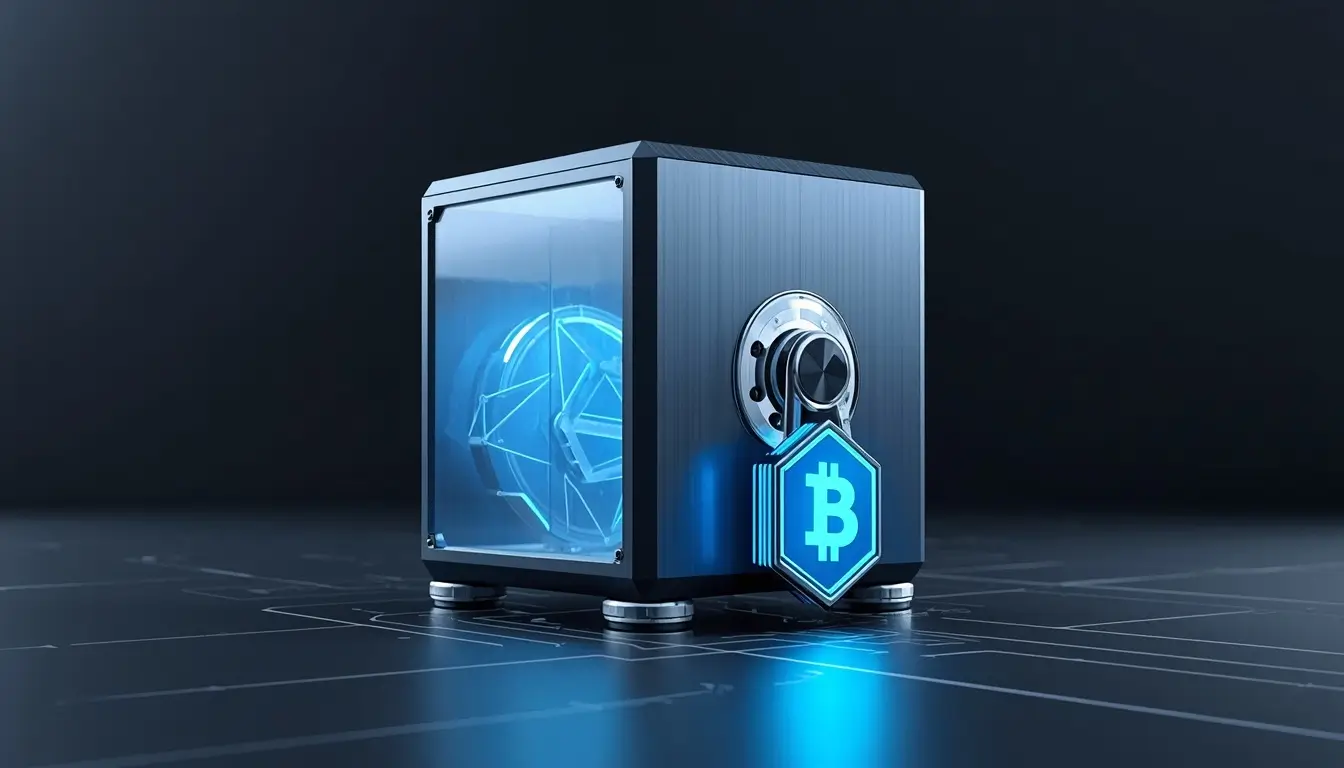
The Golden Rule: “Not Your Keys, Not Your Coins”
When you keep cryptocurrency on a centralized exchange, you hold an IOU entry in the company’s internal database while the platform controls the underlying private keys. If the exchange becomes insolvent, suffers a security breach, or freezes withdrawals due to regional compliance shifts, you lose access to your balance.
A non-custodial wallet solves this by generating a 12- or 24-word recovery seed phrase offline on your own device. Because this phrase follows universal blockchain standards (BIP39/SLIP39), you can restore and move your funds from anywhere in the world—even if the wallet manufacturer disappears.
Custodial vs. Non-Custodial: Core Differences
| Feature | Custodial (Exchanges) | Non-Custodial (Self-Custody) |
|---|---|---|
| Private Keys | Controlled by the platform | Controlled exclusively by you |
| Account Recovery | Password reset via email/ID | Self-managed via 12/24-word seed phrase |
| Insolvency & Freeze Risk | High (counterparty risk) | Zero (assets reside directly on-chain) |
| KYC & Geo-Blocks | Mandatory ID & regional limits | Permissionless global access |
| Best Use Case | Active order-book trading & fiat ramps | Long-term storage & DeFi interaction |
Types of Non-Custodial Wallets
Depending on how frequently you transact and the size of your portfolio, self-custody wallets fall into two primary categories:
1. Hot Wallets (Software & Browser Extensions)
Hot wallets run as mobile apps or browser extensions on internet-connected devices. They are free, fast, and essential for interacting with decentralized exchanges (DEXs), staking protocols, and Web3 applications daily.

The world's leading non-custodial Web3 wallet available as a browser extension and mobile application. Provides secure storage, seamless transfers, and instant token swaps across Ethereum, BNB Chain, Polygon, Arbitrum, and other EVM-compatible ecosystems.
2. Cold Wallets (Hardware Devices)
Hardware wallets are dedicated physical devices that generate and store your private keys inside an isolated Secure Element chip completely offline. Even if your computer or smartphone is infected with malware, attackers cannot extract your keys because every transaction requires physical button or touchscreen confirmation on the device itself.
Pioneering open-source hardware wallet founded in 2013 by SatoshiLabs, enabling borderless self-custody across Asia, Latin America, and global markets. Features audited firmware, EAL6+ Secure Element chips in Safe 3 and Safe 5 models, and full air-gapped sovereignty without KYC.

The global industry standard for hardware cryptocurrency wallets. Provides maximum cold storage security for thousands of digital assets, NFTs, and tokens, managed via the secure Ledger Live application with integrated non-custodial staking and web3 swaps.
Top Audited Self-Custody Wallets Compared
Compare our highest-rated hardware and software wallets side by side based on our 4-pillar M-Score security and usability audit:
| Platform | Trezor | Ledger | MetaMask |
|---|---|---|---|
| M-Score | 8.9 / 10 ★ Leader | 7.8 / 10 | 8.2 / 10 |
| Focus | HARDWARE WALLET / OPEN-SOURCE | Crypto Wallets / Web3 | WALLET / WEB3 / DEFI |
| Highlights | Pioneering open-source hardware wallet founded in 2013 by SatoshiLabs, enabling borderless self-custody across Asia, Latin America, and global markets. Features audited firmware, EAL6+ Secure Element chips in Safe 3 and Safe 5 models, and full air-gapped sovereignty without KYC. | The global industry standard for hardware cryptocurrency wallets. Provides maximum cold storage security for thousands of digital assets, NFTs, and tokens, managed via the secure Ledger Live application with integrated non-custodial staking and web3 swaps. | The world's leading non-custodial Web3 wallet available as a browser extension and mobile application. Provides secure storage, seamless transfers, and instant token swaps across Ethereum, BNB Chain, Polygon, Arbitrum, and other EVM-compatible ecosystems. |
| Audit | Read Full Audit → | Read Full Audit → | Read Full Audit → |
Frequently Asked Questions
What happens if I lose my seed phrase?
With true non-custodial wallets, there is no “Forgot Password” button or customer support desk that can reset your keys. If you lose both your device and your written seed phrase, your funds are permanently inaccessible. Always stamp or write your recovery phrase on fireproof metal or archival paper and never store photos of it in cloud drives.
Can a non-custodial wallet be drained by hackers?
While the cryptographic math behind a hardware wallet cannot be cracked remotely, users can still lose funds if they sign malicious smart-contract approvals (phishing drainers) or download fake wallet software. Always verify URLs before connecting your wallet and use hardware confirmation for significant balances.
Can I connect a hardware wallet to MetaMask?
Yes—and this is the recommended setup for active DeFi users. You can pair a Trezor M-Score 8.9 or Ledger M-Score 7.8 directly with MetaMask M-Score 8.2, giving you MetaMask’s convenient Web3 interface while keeping your private keys locked inside offline hardware.
Conclusion
If you plan to hold digital assets for the long term or interact with decentralized finance across global markets, moving off centralized exchanges is non-negotiable. Keep small daily spending balances in a reputable hot wallet like MetaMask, and secure your core savings on a dedicated hardware device like Trezor or Ledger.
Disclaimer: This guide is for informational purposes only and does not constitute financial, investment, or security advice. Self-custody requires personal responsibility for safeguarding recovery phrases. Manulik operates as an independent directory—we do not accept paid placements or affiliate commissions to alter our rankings.
Top-Rated Tools Related to This Guide
Automatically matched from our independent directory based on 4-pillar M-Score ratings (no paid placements):