Direct Answer: Rabby Wallet M-Score 8.5 is the best self-custody wallet in 2026 for active Ethereum and EVM DeFi users thanks to its open-source codebase and mandatory pre-sign transaction simulation. Phantom M-Score 8.4 is the unmatched daily leader for Solana and streamlined multi-chain UX, while Trust Wallet M-Score 8.7 remains the most convenient mobile-first starter wallet for holding 100+ blockchains under one roof.
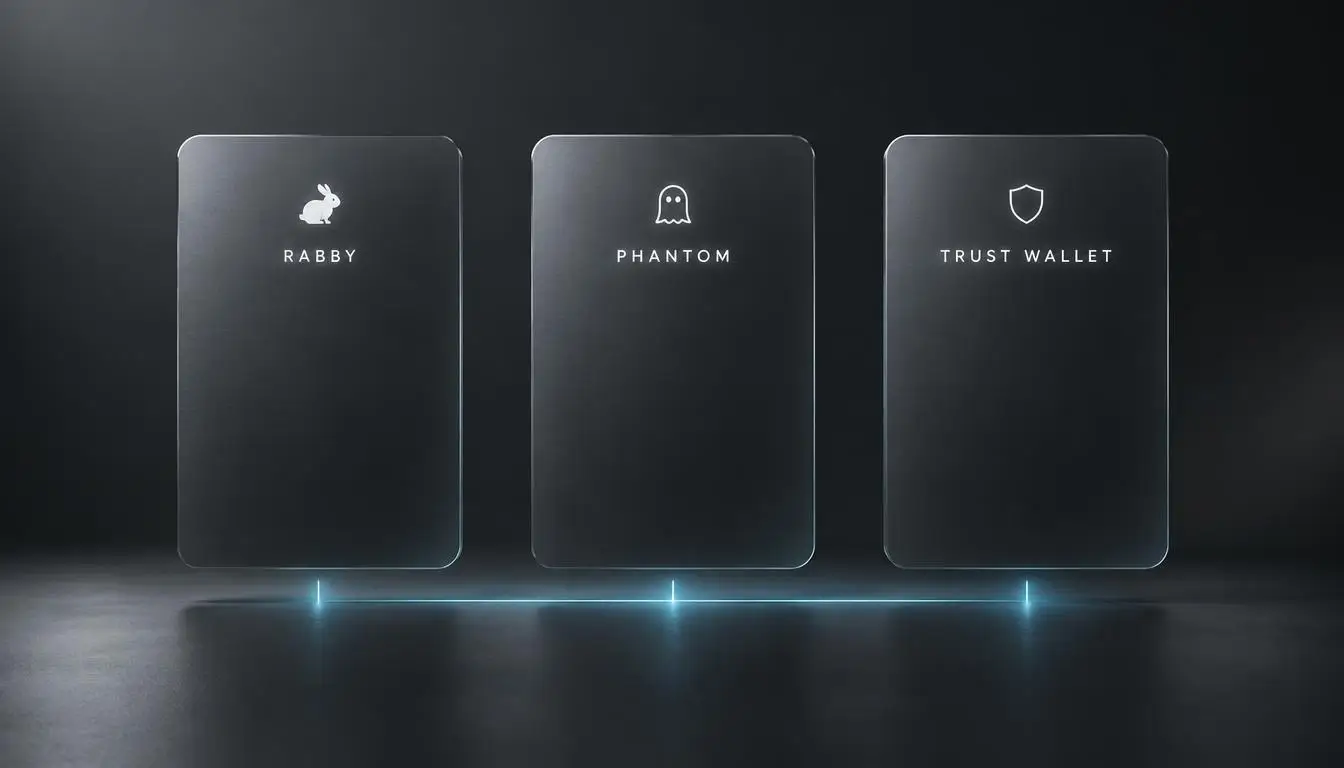
In 2026, choosing a self-custody Web3 wallet is a balance between broad multi-chain convenience and ecosystem-specific security. While millions of newcomers start with all-in-one mobile wallets, active DeFi participants quickly discover that specialized wallets offer smoother gas optimization, automatic network switching, and stronger scam defenses.
Below is a practical breakdown of how Rabby Wallet, Phantom, and Trust Wallet compare, followed by a step-by-step security guide to protecting your wallet from phishing and malicious smart contracts.
Live Rating & Overview
| Platform | Rabby Wallet | Phantom | Trust Wallet |
|---|---|---|---|
| M-Score | 8.5 / 10 | 8.4 / 10 | 8.7 / 10 ★ Leader |
| Focus | OPEN-SOURCE DEFI WALLET | TOP SOLANA & MULTI-CHAIN WALLET | MULTI-CHAIN MOBILE & BROWSER SELF-CUSTODY WALLET |
| Highlights | Open-source multi-chain Web3 wallet built by DeBank for active DeFi users across 100+ EVM networks. Features pre-transaction balance simulation, automated malicious contract risk scanning, seamless hardware wallet pairing, and automatic chain switching without manual RPC configuration. | Leading non-custodial multi-chain Web3 wallet for Solana, Ethereum, Base, Polygon, Sui, and Bitcoin. Features real-time transaction previews, automated phishing domain blocking, native SOL staking, NFT management, and seamless Ledger hardware wallet pairing across mobile and browser extensions. | Non-custodial multi-chain wallet supporting 100+ blockchains and 10M+ tokens on iOS, Android, and Chrome. Built-in Security Scanner flags malicious dApps, high-risk token approvals, and phishing addresses. Supports native in-app staking for SOL, ETH, ATOM, BNB, and TRX alongside hardware Ledger integration. 100% self-custodial with encrypted local seed storage, cloud backup options, and zero registration required. |
| Audit | Read Full Audit → | Read Full Audit → | Read Full Audit → |
Key Specs: Rabby Wallet vs. Phantom vs. Trust Wallet
| Feature | Rabby Wallet | Phantom | Trust Wallet |
|---|---|---|---|
| Primary Ecosystem | Ethereum & 140+ EVM Chains (Arbitrum, Base, Hyperliquid) | Solana (plus Ethereum, Base, Sui & Bitcoin) | 100+ Blockchains (BTC, ETH, SOL, BNB, TON, Tron) |
| Best Suited For | Active DeFi traders & multi-chain EVM power users | Everyday Solana users, DEX swaps & mobile UX | Beginners & simple multi-asset mobile storage |
| Transaction Simulation | Mandatory pre-sign balance & risk simulation | Real-time transaction preview & scam blowfish alerts | Built-in Security Scanner & address risk warnings |
| Open-Source Code | Yes (Fully open-source & audited by SlowMist) | Partially open-source (audited core components) | Mobile core open-source; browser extension closed |
| Hardware Integration | Trezor, Ledger, Keystone, OneKey & GridPlus | Ledger hardware wallet support | Ledger support via desktop browser extension |
| Available Platforms | Browser Extension, Desktop App, iOS & Android | iOS, Android & Browser Extensions | iOS, Android & Browser Extension |
1. All-in-One Convenience vs. Ecosystem Specialization
Choosing between a universal wallet and an ecosystem specialist depends on how deeply you interact with on-chain applications:
- Trust Wallet (Simple Multi-Chain Starter): Trust Wallet is comfortable for beginners who want to hold Bitcoin, Tron USDT, Solana, and Ethereum tokens in one mobile app without researching chain-specific tools. However, universal wallets always involve UX compromises when interacting with complex DeFi protocols.
- Rabby Wallet & Phantom (Built for Active On-Chain Execution): For users actively trading on decentralized exchanges, providing liquidity, or bridging assets, specialized wallets deliver a vastly superior experience. Rabby automatically detects and switches EVM networks without manual RPC setup, simulates exact balance changes, and includes a built-in approval revoker. Phantom provides the same effortless polish across Solana, handling priority fees and fast swaps seamlessly.
2. Mini-Guide: How to Use Transaction Simulation & Anti-Phishing Checks
In 2026, the number one threat to hot wallets is not brute-force hacking; it is tricking users into signing a malicious smart contract transaction. Follow this four-step routine before confirming any Web3 transaction:
- Verify the Domain Before Connecting: Never click sponsored search engine ads or random social media links to access a DEX or bridge. Always open protocols from verified bookmarks or trusted directories like DeFiLlama M-Score 9.2.
- Read the Pre-Sign Balance Simulation: When Rabby Wallet or Phantom pops up a confirmation window, look at the simulated outcome box first. If you expect to swap 100 USDC for SOL, the simulation must show -100 USDC leaving and +SOL entering. If a “free mint” or “claim” transaction shows valuable tokens or NFTs leaving your wallet, reject it immediately.
- Watch for Blind Signature & Permit Warnings: Pay close attention to red or amber warning banners flagging unverified contracts, newly deployed domains, or off-chain
Permitsignatures that grant token spending rights without a gas fee. - Revoke Outdated Token Approvals Regularly: After finishing a trade on an unfamiliar DeFi protocol, open Rabby’s built-in Approvals tab (or a dedicated revocation dashboard) and reset spending allowances back to zero so a future protocol exploit cannot touch your wallet.
3. The Weakest Link: Human Error & Capital Segregation
Even with top-tier wallet software or an institutional bank account, human psychology remains the easiest target for attackers:
- Never Keep Your Entire Portfolio in One Hot Wallet: Hot software wallets are built for daily transactions and active DeFi use with modest working balances. Storing life-changing savings on an internet-connected phone or browser extension is unnecessary risk; move long-term holdings to a cold hardware wallet like Trezor M-Score 8.9 or Ledger M-Score 7.8.
- Never Store Seed Phrases in Screenshots or Cloud Notes: Taking a photo of your 12-word recovery phrase or saving it in cloud-synced notes exposes your funds to gallery-scanning malware and account breaches. Write seed phrases strictly offline on physical paper or stamped metal.
- Always Take a Pause Under Emotional Pressure: Scammers engineer urgency around fear (“your wallet is compromised, migrate funds now”) or greed (“claim a 500% APY airdrop in the next 10 minutes”). Whenever a message demands immediate action, stop, close the tab, and verify independently.
If we rank daily Web3 wallets in 2026, Rabby Wallet is our #1 choice for its unmatched pre-sign security checks and DeFi usability across Ethereum and EVM chains. For Solana users, Phantom (alongside Solflare M-Score 8.8 for advanced staking) is the clear ecosystem standard, while Trust Wallet works best as a secondary mobile multi-chain wallet for simple transfers.
Pairing these hot wallets with a hardware signer for cold storage gives you the ideal balance of speed and protection. To explore how non-custodial wallets work alongside decentralized exchanges, see our Uniswap vs. Jupiter vs. Hyperliquid comparison and Non-Custodial Wallet guide.
4. Where Each Wallet Wins
Rabby Wallet: Best for Active EVM DeFi & Transaction Security
If you interact with Ethereum, Arbitrum, Base, or Hyperliquid DeFi protocols and want open-source transparency, automatic chain switching, and clear pre-sign balance simulations, Rabby Wallet sets the industry standard.

Open-source multi-chain Web3 wallet built by DeBank for active DeFi users across 100+ EVM networks. Features pre-transaction balance simulation, automated malicious contract risk scanning, seamless hardware wallet pairing, and automatic chain switching without manual RPC configuration.
Phantom: Best for Solana & Streamlined Mobile Web3
If your daily activity centers on Solana DEX swaps, staking, and NFTs, Phantom delivers the fastest, cleanest mobile and browser experience with built-in scam detection and multi-chain support.

Leading non-custodial multi-chain Web3 wallet for Solana, Ethereum, Base, Polygon, Sui, and Bitcoin. Features real-time transaction previews, automated phishing domain blocking, native SOL staking, NFT management, and seamless Ledger hardware wallet pairing across mobile and browser extensions.
Trust Wallet: Best for Beginners & 100+ Chain Mobile Storage
If you want a straightforward mobile app to hold Bitcoin, Tron, BNB, Ethereum, and dozens of altcoins under a single recovery phrase without managing multiple specialized wallets, Trust Wallet is the easiest starting point.

Non-custodial multi-chain wallet supporting 100+ blockchains and 10M+ tokens on iOS, Android, and Chrome. Built-in Security Scanner flags malicious dApps, high-risk token approvals, and phishing addresses. Supports native in-app staking for SOL, ETH, ATOM, BNB, and TRX alongside hardware Ledger integration. 100% self-custodial with encrypted local seed storage, cloud backup options, and zero registration required.
Frequently Asked Questions
Is it safe to use one seed phrase across Rabby Wallet, Phantom, and Trust Wallet?
While BIP39 recovery phrases can technically be imported across compatible wallets, keeping separate seed phrases for separate wallets limits your blast radius. If one hot wallet environment is ever compromised, your other wallets remain completely isolated.
Can I connect a Trezor or Ledger hardware wallet to Rabby or Phantom?
Yes. Rabby Wallet natively supports Trezor M-Score 8.9, Ledger M-Score 7.8, Keystone, and OneKey hardware wallets, while Phantom and Solflare M-Score 8.8 support Ledger devices. Connecting a hardware wallet lets you enjoy modern Web3 interfaces while requiring physical button confirmation on your offline device for every transaction.
How much crypto is safe to keep in a hot software wallet?
Treat a hot wallet like a physical leather wallet in your pocket: keep only the working funds you actively need for upcoming swaps, gas fees, or DeFi positions, and store long-term savings offline in cold storage.
Disclaimer: This comparison is for informational purposes only and does not constitute financial, security, or legal advice. Self-custody requires personal responsibility for safeguarding recovery phrases and verifying smart contracts. Manulik operates as an independent directory; we do not accept paid placements or affiliate commissions to alter our rankings.
Top-Rated Tools Related to This Guide
Automatically matched from our independent directory based on 4-pillar M-Score ratings (no paid placements):